
How to Identify Pig Skin Leather and Avoid Buying Mistakes
Have you ever looked at a leather product and wondered what it is really made from? Most people don’t think about this. But it actually matters more than you might think. Pig skin leather is used in many everyday products like shoes, gloves, wallets, and bags. Yet most buyers have no idea how to recognize it.
For Muslim brothers and sisters, this knowledge is especially important. In Islam, pig skin leather is considered haram (prohibited) and najis (impure). Using or wearing products made from pig skin is not permissible according to Islamic law. Many Muslims unknowingly purchase and use pigskin products simply because they do not know how to identify them. This guide is here to help.
Knowing what your product is made of helps you shop smarter, make better choices, and stay true to your faith.The good news is that pig skin leather has some clear signs that are easy to spot once you know what to look for. In this guide, we will show you exactly how to identify pig skin leather in simple steps.
Let’s get started.
What Is Pig Skin Leather?
Pig skin leather is real leather made from the hide of a pig. It is used in many everyday products because it is strong, flexible, and affordable. Even though it is not as commonly talked about as cowhide, it is still widely used around the world.
Islamic Ruling: According to the majority of Islamic scholars, pig skin is haram regardless of whether it has been tanned. Unlike the hides of other animals, which become permissible after tanning, pig skin remains najis (ritually impure) even after the tanning process. This is the position held by the Hanafi, Maliki, and Hanbali schools of thought. Muslim brothers and sisters should therefore avoid any product confirmed to contain pigskin, whether it is worn, carried, or used in daily life.
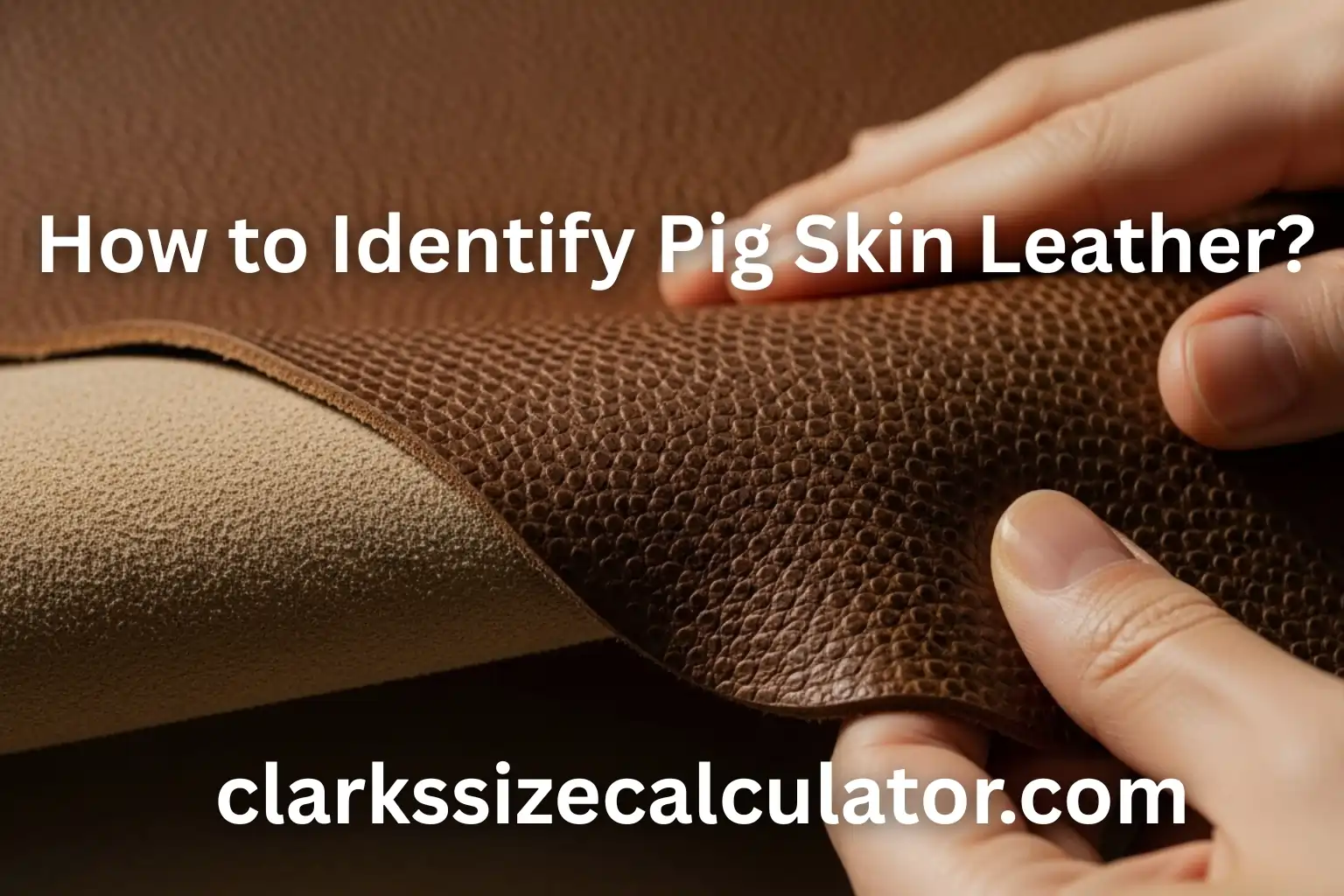
One key feature of pigskin leather is its pore pattern. The surface often shows small pores that appear in groups, which can help in identifying it. It is also naturally breathable, which means air can pass through it more easily than many other types of leather.
Pigskin is popular with manufacturers because it gives a good mix of quality and low cost. You will often find pigskin leather in shoe linings, insoles, gloves, wallets, belts, handbags, jackets, work boots, and furniture covers. This wide use means Muslims must stay alert and check products carefully before purchasing.
How to Identify Pig Skin Leather (Step by Step)
The best way to identify pigskin leather is to use more than one method together. This is important because one sign alone can sometimes be misleading.
Why this matters for Muslims: Since pigskin can appear in hidden areas like shoe linings and wallet interiors, many Muslims may unknowingly carry or wear haram products. By learning these identification steps, Muslim brothers and sisters can protect themselves from unknowingly using what is forbidden in Islam.
Start by looking at the pore pattern on the surface. Then feel the texture to understand how the leather feels in your hand. After that, check the back side if it is visible. You should also compare it with other leathers like cowhide, goat leather, and synthetic leather. Finally, check product labels or descriptions if available. These steps together give a much better and safer identification.
Method 1: Identify Pig Skin by Pore Pattern
Step 1: Look closely at the surface under good light
Check the leather in bright light so you can clearly see small surface details. Poor lighting can hide important signs. Move the item slightly to see the surface from different angles.
Step 2: Spot small pore holes
Look for tiny holes or dots on the leather surface. These are natural openings from hair follicles. They may not always be evenly spread.
Step 3: Check for grouped pores
Pigskin pores often appear in small groups instead of single points. These groups can look uneven and scattered across the surface. This is a natural feature of pigskin.
Step 4: Look for three-pore patterns
In many areas, pores appear in small sets of three. This is a strong sign of pigskin leather. However, it may not appear in every part of the product.
Step 5: Avoid confusion with fake textures
Some materials have printed or embossed patterns that look like pores. These fake patterns usually look too uniform and flat. Always check carefully for natural depth and irregular spacing.
If you spot this three-pore cluster pattern on a product, treat it as a serious warning sign. Do not purchase or continue using the item until you have confirmed the material.
Method 2: Identify Pig Skin by Texture and Feel
Step 1: Touch the surface gently
Run your fingers lightly over the leather surface. This helps you understand its natural feel. Check more than one area for better accuracy.
Step 2: Notice a slightly grainy feel
Pigskin often feels slightly rough or grainy. It is not completely smooth like some processed leathers. This texture comes from its natural structure.
Step 3: Check flexibility
Pigskin feels soft but also firm at the same time. It bends easily but still holds shape well.
Step 4: Observe breathability feel
Pigskin often feels more breathable compared to many other leathers. This is noticeable in items like shoes and gloves.
Step 5: Don’t rely on feel alone
Texture can change because of polishing, coating, or finishing. Some pigskin may feel smoother than usual. Always confirm with other methods for better accuracy.
Muslim brothers and sisters should be especially cautious when buying shoes, gloves, and bags, as pigskin is very commonly used in these categories. The texture check is a quick first step, but always combine it with other methods before feeling confident that a product is halal to use.
Method 3: Identify Pig Skin by the Back Side
Step 1: Find an exposed edge or inner side
Look for parts like folds, seams, or inside linings. These areas often show the raw material more clearly.
Step 2: Look at the fiber structure
Pigskin usually has a visible fibrous backside. The surface may look uneven and natural.
Step 3: Check for pore penetration signs
Sometimes you can see small marks or channels coming from the surface. These show that pores go through the leather layer.
Step 4: Inspect hidden parts of products
Check areas like shoe tongues, wallet interiors, and inside stitching. These spots are often less processed and give a clearer view of the material.
Step 5: Compare with the finished surface
Compare the backside with the front surface carefully. If both sides show natural leather signs, it increases confidence in your identification.
Pigskin is very commonly used as a hidden lining , for example, inside shoe insoles or bag interiors — even when the outer layer is made of another material. A product can be haram even if only the lining is pigskin. Always check the inside of shoes and bags carefully. If the inner surface shows the fibrous natural look of pigskin, the product should be avoided.
The Most Reliable Visual Sign: The Three-Pore Pattern
The three-pore pattern is one of the easiest and most reliable ways to identify pigskin leather. It is often the first thing to check because it can quickly give a clear clue about the material.
This pattern appears because pigskin hair follicles grow in natural groups. These groups form small clusters of pores that are close together. In many cases, these pores appear in sets of three. These groups may not be perfectly aligned, but they usually appear in a repeated pattern across the leather.
To identify it, look at the leather under strong, bright light. Focus on small holes on the surface and check if they appear in groups instead of single dots. Look at more than one area of the product because the pattern may not be visible everywhere.
For Muslim Brothers and Sisters: The three-pore pattern is your most powerful tool for identifying pigskin and protecting yourself from using haram products. Make a habit of checking this before buying any leather item — especially shoes, wallets, gloves, and bags. If you see this pattern, do not buy the item unless the seller can confirm with full certainty that it is not pigskin. Islam encourages caution when there is doubt, and this simple check can help you stay on the safe side.
Even if the pattern is partly hidden due to coating or embossing, you may still notice small signs of it with careful checking. Always examine several areas before making a final decision.
Pigskin vs Other Types of Leather
Understanding the difference between pigskin and other leathers helps you identify materials more accurately. For Muslims, this comparison is especially useful because it helps distinguish haram pigskin from halal alternatives like cowhide and goat leather.
a. Pig Skin Leather vs. Cowhide Leather
Pigskin has small pores that appear in clusters. Cowhide usually has pores that are more spread out and less grouped.
Cowhide is thicker and stronger than pigskin. It is often used for products that need high durability such as jackets, belts, and furniture. Pigskin is lighter and more flexible, so it is commonly used in linings and smaller items.
Islamic Note: Cowhide leather is generally halal for Muslims to use, as long as the animal was slaughtered according to Islamic guidelines. If a product is confirmed to use cowhide from a halal-certified source, it is permissible. This makes cowhide a safe and common halal alternative to pigskin.
b. Pig Skin Leather vs. Goat Leather
Goat leather has a natural grain pattern with fine lines and wrinkles. Pigskin does not have this grain pattern and instead shows small pore clusters on the surface.
Goat leather is softer and more flexible, which makes it popular for luxury items like gloves and handbags. Pigskin is slightly firmer but still flexible enough for everyday use.
Islamic Note: Goat leather is also generally halal for Muslims when it comes from an animal slaughtered properly. It is a popular alternative in many Muslim-majority countries and is widely used in traditional leather goods. When you are unsure about a product, choosing one that confirms goat or cow leather is a safer choice for Muslim buyers.
c. Pig Skin Leather vs. Synthetic Leather
Synthetic leather is made from artificial materials, not animal hide. It is designed to look like real leather but has a more uniform and controlled surface pattern.
Pigskin has natural pores and irregular texture, while synthetic leather often looks too even or repeated. The back side of synthetic leather may show fabric layers or artificial backing. Pigskin, on the other hand, has a fibrous natural structure when viewed from the reverse side.
Islamic Note: Synthetic leather is generally permissible (halal) for Muslims to use since it contains no animal-derived materials. Many Muslim consumers are now choosing high-quality synthetic leather specifically to avoid the risk of unknowingly using pigskin. If you cannot confirm the material of a leather product, opting for clearly labeled synthetic leather can be a practical and safe choice.
Comparison Table
| Feature | Pigskin | Cowhide | Goat Leather | Synthetic |
| Pore Pattern | Three-pore clusters | Random pores | Fine pores with grain ridges | Artificial pattern |
| Texture | Slightly grainy | Smooth to textured | Soft and supple | Uniform |
| Breathability | High | Moderate to high | High | Lower |
| Common Uses | Shoe linings, gloves | Jackets, belts, furniture | Luxury accessories | Fashion products |
| Halal Status | Haram (prohibited in Islam) | Halal (if properly slaughtered) | Halal (if properly slaughtered) | Generally Halal |
Tips for Buyers Concerned About Pigskin
For Muslim brothers and sisters, avoiding pigskin is a religious obligation, not just a personal preference. These practical tips will help you shop safely and confidently.
Tip #1: Check Product Details Before Buying
Always start by reading the product description and specifications. Look for clear information about the type of leather used. If the details are missing or unclear, do not assume the material is halal. It is better to choose products with clear material information — this is especially important for Muslim consumers who must avoid pigskin.
Tip #2: Ask the Manufacturer or Seller
If you are not sure, contact the seller or manufacturer directly. Ask clearly what type of leather is used. Many trusted brands will give honest answers. Muslim buyers should not feel hesitant to ask — your right to know what a product is made of is completely valid, and your faith requires you to be sure.
Tip #3: Request Material Information
For higher-priced items, try to request material documents or proof. This can include product tags or official material details. If you are Muslim and buying leather goods, especially imported products, looking for halal certification on leather items is an added layer of assurance.
Tip #4: Inspect Key Areas of the Product
Check areas like shoe insides, tongues, seams, or wallet linings. These parts often show clearer leather details. Pigskin is most commonly hidden in shoe insoles, wallet interiors, and bag linings — areas Muslim buyers must specifically check before purchasing.
Tip #5: Buy from Transparent Brands
Choose brands that clearly mention material information. Muslim brothers and sisters should prefer brands that either carry halal leather certification or clearly state they do not use pigskin. Avoid products with unclear or general labels like “genuine leather” only, as this label does not tell you what animal the leather came from.
Quick Pig Skin Leather Identification Checklist
| Stage | Checklist Item | What to Do |
| Before Buying | Check the product label | Look for clear mention of pigskin or leather type. Avoid if unclear — especially important for Muslims. |
| Before Buying | Review material specifications | Read product details to confirm what type of leather is used. |
| Before Buying | Ask the seller about leather sources | Contact seller or brand if material information is unclear. |
| After Inspecting | Look for three-pore clusters | Check for small pore groups, especially sets of three. If spotted, treat as a haram warning. |
| After Inspecting | Feel for grainy texture | Touch the leather to notice a slightly rough, natural feel. |
| After Inspecting | Examine the backside | Look at inner or reverse side for fibrous natural structure. |
| After Inspecting | Compare with other leathers | Confirm it is cowhide, goat leather, or synthetic — all safer options for Muslim buyers. |
Can Synthetic Leather Mimic Pig Skin? Here’s How to Tell
Synthetic leather is sometimes made to look like pigskin. Manufacturers may add printed or embossed patterns that copy the look of real leather. From a distance, it can look similar, so careful checking is important.
However, there are clear differences when you look closely. Real pigskin has natural pores with uneven spacing and depth. Synthetic leather usually has very uniform patterns that look repeated and flat. The edges of pigskin show natural leather fibers, while synthetic leather often shows fabric layers or a plastic-like backing.
Breathability is also important. Pigskin allows air to pass through, while synthetic leather usually traps more heat and moisture.
For Muslim Brothers and Sisters: While synthetic leather mimicking pigskin can cause confusion visually, the good news is that synthetic leather is not derived from any animal, making it generally halal. If you can confirm a product is fully synthetic, you can use it without concern. The key is to ensure it is not real pigskin trying to pass as synthetic — the checks above will help you confirm this.
Frequently Asked Questions
1. Can Pigskin Be Hidden?
Yes. Heavy coatings, pigments, embossing, and finishing treatments can partially or completely conceal the natural pore pattern. This is a serious concern for Muslim buyers, as pigskin is often hidden in inner linings, insoles, and interior panels. Always inspect internal areas of products carefully.
2. How can I tell if my shoes contain pigskin leather?
Inspect the shoe lining, tongue, insole, and interior surfaces. Look for clustered pores, especially the three-pore pattern. Also check product labels and manufacturer specifications. Muslim brothers and sisters should make this a habit whenever buying new shoes, as pigskin shoe linings are very common.
3. Does pigskin leather have a smell?
Pigskin generally has a natural leather smell similar to other genuine leathers. However, tanning chemicals and finishes can alter the odor. Smell alone is not a reliable identification method.
4. Is pigskin stronger than cowhide?
No. Cowhide is generally thicker and stronger than pigskin. Cowhide is also a halal alternative for Muslim buyers when sourced from properly slaughtered animals.
5. Can pigskin be used in luxury products?
Yes. Although it is more commonly associated with practical products, pigskin can also be used in luxury gloves, handbags, wallets, and specialty leather goods. Muslim buyers should not assume that luxury or expensive products are free from pigskin. Always verify the material regardless of the price.
6. Do all pigskin leathers show the three-pore pattern?
Not always. Finishing processes, coatings, embossing, and pigments can obscure the pattern. In some products, the pores are only partially visible or require close inspection under good lighting. If you cannot confirm the material at all, the safest Islamic approach is to avoid the product.
7. Is pigskin leather haram in Islam?
Yes it is haram. According to the majority of Islamic scholars across the four major schools of thought (Hanafi, Maliki, Shafi’i, and Hanbali), pig skin remains najis (impure) even after tanning and is haram to use. Muslim brothers and sisters are strongly advised to avoid any product confirmed or suspected to contain pigskin leather.
Conclusion
In conclusion, anyone can identify pig skin leather with a little practice. Just look for small pores that appear in groups of three, feel for a slightly rough texture, and check the back side for a natural fibrous look. Always read the product label before buying. Do not rely on just one method — use a few checks together to get the right answer.
For our Muslim brothers and sisters: This knowledge is not just about being an informed shopper — it is about protecting your faith and making sure what you carry, wear, and use is permissible according to Islam. Pig skin is haram, and it is more commonly used in everyday products than most people realize. Shoes, wallets, gloves, and bags all frequently use pigskin, often hidden in inner layers. Now that you know the signs, you are equipped to make halal choices with confidence. Just as we are careful about what we eat, we should also be mindful of what we wear and use.
Now you know exactly what to look for — so next time you shop for leather goods, you will never have to guess again. Go check your wallet, shoes, or bag right now and see if you can spot the signs — and share this guide with your family and friends so they can shop safely too.